pastpersistent

the past in pop culture

Category: History

Man-Eating Colonists

Archeological digs at Jamestowne Historic Nati...

Archeological digs at Jamestowne Historic National Park (Photo credit: sarahstierch)

Archaeologists have had a big year. First it was Richard III turning up under a parking lot. Now it’s the settlers at Jamestown eating one of their own. A team from the Smithsonian rolled out the news that in their recent excavation of a garbage dump at the site of the Jamestown colony in Virginia, they found skeletal remains of a girl who showed signs of having been butchered. In 1609-1610, English colonists faced a long hard winter in the the tiny outpost on the edge of the North American continent and they got a little hungry. In fact, most of them starved to death, died of disease, or were killed by the Powhatan Indians who besieged the fort the colonists had barricaded themselves inside.

The Jamestown archaeologists seem to have taken a tip from their confreres at the University of Leicester who found Richard III: they also came up with a facial reconstruction of the poor girl (dubbed “Jane”) whose life in the New World came to such a bad end. While she looks a little dour in the picture, she’s been outfitted with a fetching kerchief. Some observers have been catty enough to suggest that such forensic reconstructions are just attention seeking behavior given that they serve no real research purpose. Certainly, the team’s recounting of the cut marks on the bones at the press conference had the breathlessness of breaking news reported by a rookie anchor. This was a little odd given that the events in question took place more than four hundred years ago. But let’s have some compassion. It’s not easy making a professional practice that requires mind-boggling feats of patience and endless hours of wielding very tiny toothbrushes news worthy.

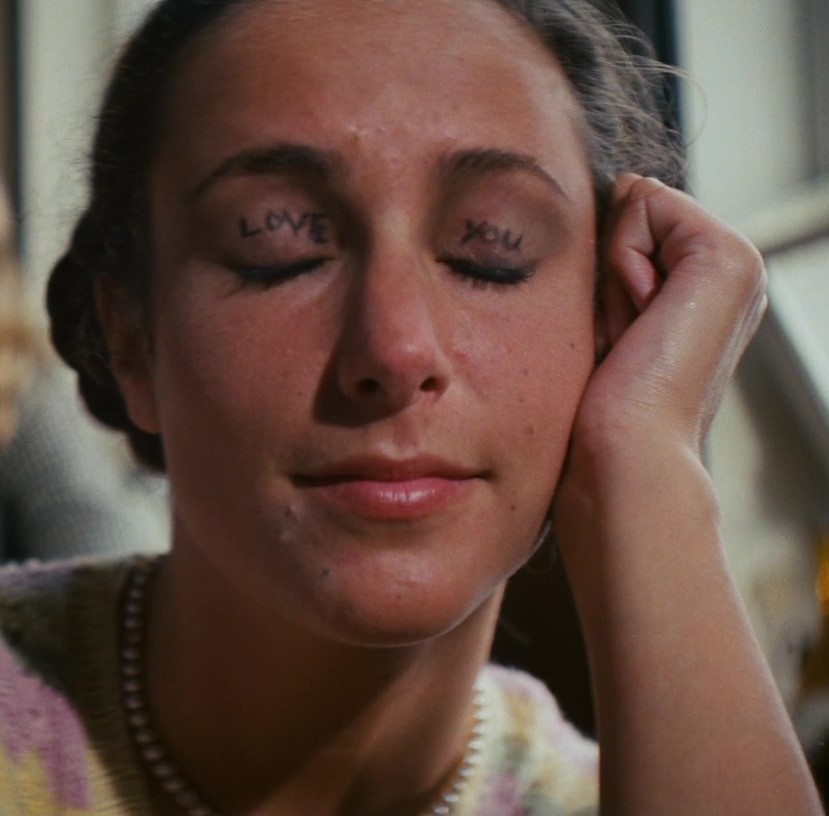
Not since a college student flashed the message “love you” on her eyelids at Indiana Jones has the profession seemed cool. Indy didn’t spend much of his time sifting detritus through ever finer mesh screens. One character in Raiders of the Lost Ark described Jones as a, “Professor of archeology, expert on the occult, and how does one say it? Obtainer of rare antiquities.” If his methods were a bit unorthodox, they sure were cinematic. Who knew that that a bull whip could come in so handy out on a dig? At least the Jamestown crew didn’t have to wade through a pit of venomous asps. Hollywood is good at making even the most tedious kinds of research seem exciting. Why wait hours for documents to be delivered to your desk when you can just break into the Library of Congress á la National Treasure? And wouldn’t you be more motivated to find what you’re looking for in the Vatican’s archives if the air were being sucked out of the room (Da Vinci Code)?

So let’s forgive the archaeologists for going all Cold Case on us when they finally found the material evidence to back up what textual evidence has suggested for a while. It’s not news that the colonists resorted to the last resort. Survivors of the starving time in Jamestown wrote accounts of what had happened there. Historians accept those accounts as valid and also as ironic reversals: the European newcomers to the Americas almost always accused the natives of being cannibals. The reversal these days is that the Jamestown news has been greeted with a shrug. Ho hum—more survival cannibalism. The London Guardian included a helpful poll with its story asking readers whether they’d eat human flesh in similarly extreme circumstances. Over two thirds answered yes and added some jolly puns in the comments about Jack Lemmon and Francis Bacon.

We might take this as an acceptance of the desperate measures taken by desperate people. Less charitably, it looks like the cynicism of the over entertained and over fed engaged in a thought experiment along the lines of: what if the moon were made of cheese? In short, we whistle past the graveyard and hope never to find ourselves in such straits. Yet of course, some people do. The young men who survived a plane crash in the Andes in 1972 in part by consuming the flesh of their friends have spent the rest of their lives telling the tale and meditating on its meaning. While the famous account of this in the book (and later movie) Alive emphasized the drama, the more recent documentary Stranded: I’ve Come from a Plane that Crashed on the Mountains deepens the story by asking the survivors to reflect not only on what they did but on what this did to them. These now old men tell the story honestly, but never lightly. “This is now bone of my bones, and flesh of my flesh.” Rest in peace, Jane of Jamestown.

Gatsby: A Matter of Infinite Hope

English: Cover of a 1922 edition of F. Scott F...

English: Cover of a 1922 edition of F. Scott Fitzgerald’s book Tales of the Jazz Age, painted by John Held, Jr. (Photo credit: Wikipedia)

Baz Luhrmann has a modest goal for his movie version of The Great Gatsby. He plans to fulfill every high school English teacher’s fantasy: making the book seem relevant to our present moment. In the age of the one percent, this doesn’t seem like much of a stretch. Gatsby’s parties will come alive in lurid 3D decadence to a soundtrack that replaces the jazz of the Jazz Age with the bass and beat of hip hop and the club. Everything will be bigger and better. Judging from the trailer (and that’s all we here at pastpersistent can judge from in the absence of an invitation to the premiere at Cannes), Gatsby won’t just toss a dazzling array of custom made shirts at Daisy and Nick, he’ll rain them down on their heads off of a balcony.

If this isn’t excitement enough, the trailer also highlights the film’s homage to the car chase scene from The French Connection. Although Gatsby usually  doesn’t strike one as an action filled novel, Fitzgerald does make a reference to Gatsby’s car speeding along at more than forty, yes, even fifty or sixty miles per hour. The car might be slow but the movie makers stayed true to the novel’s cold-eyed analysis of nouveau riche desperation. They reportedly plunked down more, possibly much more, than a million each for three 1929 roadsters.

In ways large and small, the rest of us are encouraged to do the same. Brooks Brothers and Tiffany’s are rolling out Gatsby inspired collections. But if a six figure ring is beyond your price point, you might be able to swing some eye shadow. And in a worst case scenario, you could always buy the book. You won’t be alone. Despite the kerfuffle over the new movie tie-in cover, Fitzgerald’s 1925 classic is on its way to the top of the year’s bestseller list.

The merchandising does kind of undercut the novel’s premise: that you can’t buy your way into social acceptance in America. It’s a problem for the film. These days, a guy like Jay Gatsby would have to behave a lot worse to get any pushback. No, for an actual takedown of arriviste tackiness, what you need to watch is The Queen of Versailles, the recent documentary about a wealthy timeshare king and his beauty pageant trophy wife as they undertake to build the largest private home in the United Sates. Getting takeout for ten from McDonald’s in your stretch limo while dropping a few million on outfits worthy of the adult film industry—now that’s tacky. Indeed, it doesn’t take much to imagine that this is how Gatsby’s Myrtle (Tom Buchanan’s middle-class mistress) would have behaved were she actually to have deposed Daisy and run off with the rich guy.

Jay Gatsby, as played by Leonardo DiCaprio, is, in Daisy’s famous line, much too cool for all that. If the movie works—and we’ll know soon enough even if we don’t have press passes for Cannes—it will surely be due to the boy wonder all grown up. DiCaprio’s got the Fitzgerald feel. In Titanic he gave us the longing of the steerage-class striver who shouts “I’m the king of the world” from the bow of the world’s most famous boat. In Catch Me If You Can, he charmed us as the slippery shape-shifting con man who was everything to everyone despite being nothing at all. In Woody Allen’s Celebrity, he made sly fun of his own image as a badly behaved star and in Aviator, took a turn as troubled genius Howard Hughes whose greatness was undone by paranoia and obsession.

These are facets of the American character that Fitzgerald set out to autopsy in Gatsby. At the start of that novel, the eponymous character was already dead and Nick Carraway, the staid everyman who narrates Gatsby’s story, has already returned home to the humdrum Midwest. The lights have done dark in Gatsby’s mansion. And when the lights come up in the movie theater, one wonders what will remain with us: the brightness of the fireworks or the brevity of their sparkle.

The Guantanamo Games

English: NAVAL STATION GUANTANAMO BAY, Cuba (A...

English: NAVAL STATION GUANTANAMO BAY, Cuba (Aug. 25, 2011) The American flag flies over Naval Station Guantanamo Bay. (U.S. Navy photo by Mass Communication Specialist 2nd Class Kilho Park/Released) (Photo credit: Wikipedia)

Alice Paul told a journalist in 1917 that “I’ve been forcibly fed, and I feel that every atom of American self-respect within me has been outraged.” Last week, in a piece titled “Gitmo is Killing Me,” Samir Naji al Hasan Moqbel wrote in the New York Times of his own experience of force feeding that he “would not wish this cruel punishment on anyone.” Moqbel and other prisoners at the American base in Guantanamo, Cuba started a hunger strike earlier in April that now involves nearly half the men. Sixteen are presently being force fed.

The HBO movie about Alice Paul’s leadership of the American suffrage movement, Iron Jawed Angels, graphically depicted what force feeding looks like. Paul, played by Hilary Swank, is forcibly restrained and has a tube shoved down her throat to allow the guards to pour a mix of milk and raw eggs into her as she wretches and struggles. It’s difficult to watch. No doubt this explains why almost every other movie that incorporates force feeding into its plot is a horror film. Doctor Irene Martinez, herself a victim of imprisonment and torture in Argentina, wrote in an essay on Iron Jawed Angels in the book The Picture of Health: Medical Ethics and the Movies that the force feeding of prisoners meets the definition of torture according to many international protocols governing medical ethics. In Angels, this act of suffering makes Paul’s heroism transcend the narrow mindedness of those who oppose her cause. When the press reveals the abuse that Paul and her fellows received, the public outcry shames the administration of President Woodrow Wilson into freeing the women and eventually supporting the 19th Amendment.

Or so the movie would have it. As Olga Khazan of The Atlantic points out in “Why the Guantanamo Bay Hunger Strikes Probably Won’t Work,” the success of women’s suffrage movements in the United States and Britain did not result primarily from the use of hunger striking by a small group of activists. Suffrage came about because of mass mobilizations of women and men for decades. It’s also worth noting here that Alice Paul, Lucy Burns, and the other suffragists sent to the Occoquan workhouse to serve sixty-day sentences for trespassing (by picketing in front of the White House during war time) didn’t go on a hunger strike to directly advocate for women getting the vote. They did so to make clear that they believed themselves to be political prisoners and to protest the ill treatment to which they were subjected.

Hunger strikes are exceptionally useful for making the jailers look bad. Khazan finds that in recent times, such strikes in prisons have been highly effective—at least in cases where the public found the strikers sympathetic. She concludes however that the Guantanamo prisoners won’t succeed because Americans just don’t care and notes, in an update to her piece, that polls showing precisely such attitudes influenced the Obama administration’s decision to renege on the campaign promise to close the prison at Guantanamo. Indeed, the very reason that many of the prisoners at Guantanamo have gone on a hunger strike is that the United States cleared eighty-six of them for release and yet continues to imprison them. Moqbel, after eleven years in prison, was cleared in January but since the U.S. does not want to send any former prisoners back to Yemen, his country of origin, he remains a prisoner. In his New York Times op-ed he writes of this situation, “I am a human being, not a passport, and I deserve to be treated like one.”

In Salon, Falguni Sheth questions Khazan’s conclusion that the Guantanamo hunger strikers are unsympathetic. The suggestion that they cannot gain sympathy through their actions rests on the assumption that they can only be unsympathetic. Sheth argues that those who would keep them there without charges, a trial, or any evidence of guilt are not likely to be moved by their hunger strike, but those who believe in the rule of law are likely to be troubled indeed. She continues that even where prisoners are not, in themselves, sympathetic figures, their action as hunger strikers often is. They attempt to harm only themselves. When force fed, their dehumanized condition is more fully revealed. The question, finally, is whether as Paul put it, Americans’ atoms of self-respect will be outraged.

UPDATE (April 30, 2013): The hunger strike at Guantanamo has continued to expand and has now pushed President Obama to renew his commitment to resolving the situation. He stated, “The idea that we would still maintain forever a group of individuals who have not been tried,” he said, “that is contrary to who we are, contrary to our interests, and it needs to stop.”

Sowing Wheat, Reaping Thorns

Grain Elevator

Grain Elevator (Photo credit: nouspique)

In a country that finds beauty in its heartland’s amber waves of grain, investigative reporting by NPR and other publications on a series of deadly accidents at grain silos hits the solar plexus hard. In the most recent incident, two teenage workers—one fourteen, one nineteen—suffocated to death after they fell through a crust of dried corn and were buried in a sinkhole of grain. A third worker, a close friend of the other two, survived six hours in the bin because a co-worker threw him a bucket as he went down. He put it over his head and was able to breathe while he waited to be dug out. Sadly, this was not an isolated incident. As NPR shows, too often safety regulations such as requiring workers to wear harnesses while they walk on top of the grain are ignored by companies due to lax enforcement, low penalties, and few criminal prosecutions. This has made such accidents a depressingly regular occurrence—179 deaths since 1984. One in four victims has been under eighteen years old. In addition, explosions at grain elevators caused by the combustion of grain dust have claimed more lives making employment at such places the most dangerous occupation in Kansas.

In the early twentieth-century, pioneering director D.W. Griffith made a short film titled A Corner in Wheat that comes to a dramatic climax with a man drowned by grain. In a spectacular triumph of cross-cutting, Griffith assembled a three part story about poor wheat farmers sowing their crops, impoverished city dwellers unable to afford bread, and Wall Street speculators cornering the market in wheat. The editing implies the moral: that the speculator is profiting from the powerlessness of the farmer and the bread customer. In the film’s signature scene, the wheat king and his friends decide to end their celebratory banquet with a visit to a grain elevator to see the source of their riches. The elevator operator motions the wealthy revelers away from the edge of the grain bin as the chute spills wheat down into it. Just then, the wheat king’s secretary arrives to deliver a telegram informing him that he has gained a monopoly over the world wheat market. As he jumps for joy, he loses his balance and plunges over the edge into the bin of wheat where wheat pours down on him. He is suffocated by the very source of his wealth and power.

The United States is the world’s largest grain producer. In the mid-nineteenth century, Joseph Dart of Buffalo, New York developed the modern grain elevator to take advantage of economies of scale by storing vast quantities of grain in bulk and loading it directly into railroad cars or ship hulls. Such innovations transformed the international trade in grain by tying it to modern systems of transportation and finance. Grain elevators came to dot the plains of the nation’s interior. Nearly every agricultural community had its own. They were the largest buildings on the horizon and came to be part of the region’s visual iconography. In their time, they were symbols of modernity that impressed European architects with their sheer size and functionality. Many have since fallen into disuse as they have been replaced by fewer, larger, and more modern storage facilities. The older buildings now inspire nostalgia for a rural past that seemed simpler.

This is the paradox of American agriculture. It remains one of the nation’s core industries even as the number of Americans directly involved in it has relentlessly shrunk. The inefficiencies of the once extensive system of small-scale family farms have led to their replacement by larger and larger ones. While undoubtedly more productive, an entire way of life has withered away. These days, agricultural workers are more likely to be low paid employees than land owners or operators. And however efficient, the ability to produce and stockpile mountains of corn, wheat and soybeans have long raised questions about the morality of speculating in futures for basic food supplies. On the one hand, the profit motive provides an incentive for storing food when it’s plentiful so that it is available when it becomes scarce. This helps keep people fed. On the other hand, speculating in food also has the potential for corruption.

Griffith’s depiction of the wheat speculator drowned by his own greed was so powerful that later filmmakers employed it to make similar comments on struggles between good and evil. In 1931, Danish director Carl Dreyer had an evil doctor who was in league with the undead Vampyr of the film’s title suffocated by flour at the town mill. In 1985, Peter Weir made Witness a city-versus-country drama starring Harrison Ford as a jaded Philadelphia cop who has to go into hiding in Pennsylvania farm country to protect a young Amish boy who witnessed a murder. When the corrupt city cops show up at the farm to kill Ford, he survives in part by luring one—the original murderer—into the silo and then opening the chute to crush him in grain. In both cases, the goodness and bounty of agricultural production are what balance the moral debt owed to society by the evil doers.

Away from the silver screen, it has been workers who have suffered and died in grain handling accidents. In 1993, Ron Hayes lost his son Patrick when sixty tons of grain fell on him in a Florida silo. In the years since then, he and his wife have founded The F.I.G.H.T. (Families In Grief Hold Together) Project to assist other families who have lost loved ones due to preventable workplace accidents. Too little has changed since then. In the late 1890s, Mary Elizabeth Lease, better known as Mother Jones, a labor activist and Populist, supposedly told farmers who were oppressed by bankers to “raise less corn and more hell.” The United States is not likely to cut back on its corn production, but raising hell is still an option.

Titanica: A Night to Remember, and Remember, and Remember

The iceberg suspected of sinking the RMS Titan...

The iceberg suspected of sinking the RMS Titanic; a smudge of red paint much like the Titanic’s stripe was seen near the base. (Photo credit: Wikipedia)

In 2016, the Titanic sails again. At least that’s the plan. Australian billionaire Clive Palmer recently signed a deal with a shipyard in Nanjing, China to begin construction on the recreation of the ill-fated ship that sank one hundred and one years ago. Right now Palmer is on the road with the Titanic II World Tour. Guests of the events enjoy an eleven course meal based on the menu served aboard ship on its last night and then they can tour Titanic the Exhibition. Palmer’s company, The Blue Star Line, is taking reservations for passage on the ship’s maiden voyage. The list is reportedly more than 40,000 names long already.

Rebuilding the lost liner raises some interesting questions. The re-built ship will feature the same exterior design and interior décor. Passengers will eat the same meals, be encouraged to dress in period costume, and even be obliged to respect the same divisions amongst first, second, and third class as on the original. On the other hand, the boat will not recreate the design features that made it vulnerable to sinking and, by contrast, will have a full complement of lifeboats and safety equipment. This Titanic, in other words, is intended to arrive to its destination with all its passengers still safely aboard. (And on a happy note from the ship’s perspective, though perhaps troubling in other senses, global warming means that the ship isn’t likely to encounter many large icebergs in the North Atlantic.) Being true to the past, in this case, won’t include a reenactment of the dramatic part of the Titanic story.

Titanic II will sail its maiden voyage along the original route, from Southampton to New York. It will have to navigate half the globe from China to Great Britain first, but the definition of “maiden voyage” doesn’t count the travel from shipyard to ship launch. Indeed, Palmer noted at a Titanic II event in Macau that the new ship will not sail in Chinese waters. Presumably this is a nod towards the recreation’s fidelity to the original, however geographically impossible this might be.

The Belfast Titanic Society is not amused. Representatives from the group had hoped that at least part of the ship’s construction would be done at the shipyards in the Irish city where the original Titanic was constructed. According to one member, they also hoped that the Titanic II would serve as a floating public history memorial to the ship that would feature educational programs about the people who built it and went down with it. Instead, they now fear that Titanic II will recreate not the experience of the 1912 luxury liner, but that of James Cameron’s 1997 eponymous movie.

The idea that some people know the Titanic only as the setting for the fictional story of Jack and Rose and their doomed love affair seems far-fetched at first. Few historical events have been better or more lovingly documented than the sinking of the Titanic. In the United States there are two major museums that re-create not only parts of the ship, but even the iceberg. The city of Belfast has created a Titanic Quarter that is anchored by a building known as the Titanic Belfast. These are complemented by Titanic themed tours and even a light show in an effort to use Belfast’s historical associations with the well-known story to promote tourism, investment, and urban renewal. The RMS Titanic, the company that owns the rights to salvage parts of the wreck, has been touring its Titanic artifacts exhibition around the world. This is not to mention dozens of smaller museum exhibits and hundreds of books published on the topic. Perhaps it’s impossible to ignore the historical reality of the sinking of the Titanic but it’s easy enough to see that it’s dwarfed by the media that represents it. In its time, the event made a profound impression on all who learned of it and the story has since become an allegory for the perils of hubris and excessive ambition and for the virtue of heroic self-sacrifice and the vice of cowardly self-preservation.

Despite its outsized reputation, the Titanic was not the world’s worst maritime disaster. In fact it ranks seventh in terms of lives lost on ships sunk in peacetime. The worst disaster was quite a bit more recent. In 1987, a Philippine ship known as Doña Paz went down after a collision with another ship and took more than 4,000 of its passengers with it. The ship was being used to ferry passengers around the archipelago. It was overloaded and the ship that rammed it, unlicensed and understaffed. The Doña Paz caught fire as it sank and the passengers who leapt into the water to escape it also faced the threat of sharks. Despite the magnitude of the tragedy, the event remains little known. A National Geographic documentary about it that has tried to correct this chose the title, Asia’s Titanic.

And so the Titanic continues to loom in our imagination. In these days of cruise ships gone wild (see Costa Concordia and Carnival Triumph), the luxury liner industry seems a little tawdry. It remains to be seen whether the Titanic II will be an extension of this trend, or a reversal. For now, the unsinkable ship that sank remains improbably afloat on a vast sea of remembrance, recreation, and reenactment. It doesn’t seem likely that it will be going down again any time soon.

But Some of My Best Friends Are Bananas

The title page of The Wonderful Wizard of Oz, ...

The title page of The Wonderful Wizard of Oz, also known as The Wizard of Oz, a 1900 children’s novel written by L. Frank Baum and illustrated by W. W. Denslow. (Photo credit: Wikipedia)

In a clip titled “Bananas” from Oz the Great and Powerful, Finley the flying monkey takes offense when Oscar (who later becomes Oz) offhandedly remarks that he must surely like bananas. Finley calls him out for stereotyping monkeys. Oz tries to make amends by asking whether he likes bananas. To which Finley replies, “Of course I love bananas. I’m a monkey. Don’t be ridiculous. I just don’t like you saying it.” Ba dum bum.

It’s a short scene, a lot shorter than the version of the same joke in Crash (2004). In that one, Peter and Anthony, two young African American men, come out of a restaurant in an upscale L.A. neighborhood. Anthony starts ranting about how all white people assume they must be criminals because they’re black.

Anthony: Do we look threatening? No. Fact, if anybody should be scared around here, it’s us: We’re the only two black faces surrounded by a sea of over-caffeinated white people, patrolled by the trigger happy LAPD. So you tell me, why aren’t we scared?

Peter: Because we have guns?

Anthony: You could be right.

And then they carjack a white couple who just walked by. Ba dum bum CHING. Crash, though, is a movie about the collisions that racial fears cause and it tries to disrupt expectations by alternating between playing to the stereotype and upending it.

In Oz, the joke is a throwaway. It’s funny because it’s harmless: of course monkeys like bananas! Now, Hollywood cartoons have a long history of taking cute animals and giving them human traits that wouldn’t quite pass muster if they were played by people instead of pixels or paint. But as suspicious as it might be that a monkey is being made fun of for being over sensitive, let’s let the monkey go even if he is dressed as a bellhop. Finley is in good company. Lots of other monkeys have played second banana to humans: Curious George and the Man in the Yellow Hat, Ronald Reagan and Bonzo, Justin Bieber and Mally, Han Solo and Chewbacca (c’mon: he’s a monkey).

If we really want to run with the theme of excessive sensitivity, how about some concern for the humble banana in the joke? Oz tells Finley, “I’ll get that big pile of gold, and you can have that nice pile of bananas.” This lets us know that Oz has some character issues. Gold is a prize, bananas are for chumps. They’re cheap and common and considered the world’s most popular fruit. It hasn’t always been that way, at least in the United States where bananas are not grown commercially.

L. Frank Baum does not have any character, monkey or human, eating bananas in the original book The Wonderful Wizard of Oz (1900). At that time, bananas were only just starting to become popular and inexpensive enough to be accessible. Besides, Oz takes off from desolate Kansas. Baum’s book was influenced in part by the time he spent out west in the Dakota Territory in the 1880s and 90s. He lived through a serious drought and experienced firsthand some of the conflicts between debt burdened farmers and the eastern bankers and western railroad men—robber barons all—who made their lives impossible. Some scholars suggest that the Wizard of Oz is one big political allegory about the struggles of the little people against the money power.

Which brings us back to bananas. Railroad magnates and bankers didn’t just expand to the west, they also went south to Central America. In 1899, after a series of mergers of railroad, steamship, land, and telegraph companies, the United Fruit Company was born as a monopoly along the lines of Standard Oil or Carnegie Steel. They brought Americans a steady supply of cheap bananas, but often at a steep cost to the countries that produced them. Ruthless exploitation and political meddling on the part of the company contributed to government instability in a number of countries. Now we think of Banana Republic as a clothing store. It used to be a derogatory term for a country that was really little more than a dependency of a large corporation. UFCO eventually acquired such a negative reputation that, following a 1972 payola scandal in Honduras known as Bananagate, it shed its original name in favor of the cuter and sweeter Chiquita.

These days, Chiquita is a cartoon lady with a basket of bananas and other fruits on her head. In the past, she was actually a banana in a tropical style dress, frequently shown winking or posing seductively, ripe for the plucking. It’s a false suggestiveness. The bananas on large commercial plantations are actually virgin fruits. They have no seeds and are reproduced via parthenocarpy, or asexually. And however abundant the bananas in the hat, they are all depressingly the same. Endlessly propagated from the same genetic material, the type of banana cultivated for export is predictable enough to base a gigantic industry on. The fruits are picked green, packed in refrigerated containers, and chemically ripened at their destination. So Finley, the faithful little friend, can have his pile of bananas. And Oz, the pile of gold.

Take Me Home, Country Roads

Migrant Mother (LOC fsa.8b29516)

Migrant Mother (LOC fsa.8b29516) (Photo credit: Wikipedia)

Okie. Hillbilly. Redneck. What do “Migrant Mother” and Shain Gandee have in common? The first is the name of the iconic photograph that practically stands in for the words “Great Depression.” The second is the name of the young man who recently died shortly after becoming known for participating in the MTV reality show Buckwild. Similarities between the two? Not many—except a persistent interest in gazing at the rural poor.

In 1936, photographer Dorothea Lange stopped at a pea pickers camp in California. She found the pickers suffering from hunger because the crops had frozen and there wasn’t enough work to go around. Many were from the Ozarks and especially Oklahoma—and so “Okies” became a disrespectful term for the desperate Dust Bowl migrants who flooded into California. Lange was working for one of the New Deal agencies designed to relieve the suffering of the Great Depression. Lange’s job was to document said suffering. She did so most brilliantly with this photograph of Florence Owens Thompson and two of her children. The “Migrant Mother” title came later. The original caption read, “Destitute pea pickers in California. Mother of seven children. Age thirty-two. Nipomo, California.” Lange never took down Thompson’s name nor sent her a copy of the photograph.

Thompson, then, became famous anonymously. Shain Gandee only became truly well-known this week, after he and two others died of carbon monoxide poisoning after his truck got stuck in the mud. Gandee was just 21 years old. Producers selected him and a handful of other young people for Buckwild, a show intended by MTV to replicate the popularity of Jersey Shore. Instead of Italian Americans partying hard on the boardwalk down the shore, Buckwild had backwoods West Virginians drinking, fighting, and racing pickup trucks through the mud. “Mudding” was what Gandee was doing when he died. This has since led MTV to suspend production on the second season of a show that had already been criticized for exploiting stereotypes of West Virginians. In case you’re not sure what these might be, they include characterizing West Virginians as “moonshine-swilling, gap-toothed inbred hillbillies in tattered clothes and bare feet.” In fact, most of the West Virginian young adults on Buckwild were college students or graduates. Gandee was an exception.  Part of his appeal, according to the show’s producers, was that he didn’t have a cell phone and wasn’t on Facebook. He was described as genuine and down to earth. His local accent was thick enough that the show gave him subtitles so the rest of America could understand him.

Gandee, in other words, was a simple man from the hollers of the backwoods. It was an unlikely story that landed him in the news this week. His death brought out the facts of his life into greater relief especially as news reports revealed that his family was trying to organize charity events to pay for his funeral. (This finally shamed the producers into offering to pay for it.) This is oddly reminiscent of Florence Thompson. She was only recognized as the woman in the “Migrant Mother” photograph late in life. Thompson hated the picture for defining her by her poverty and hated it even more for having made her image, but not her self, world famous. Yet when she became sick with cancer, her children were able to use the photo’s fame as a way to raise money for their mother’s health care in the last months of her life.

It’s been nearly a century since a majority of Americans were rural people. Yet the influence of the rural past persists. For the 2013 Superbowl, Dodge ran a commercial for its Ram truck that is a heartfelt hymn to the American farmer. It ends with the tagline, “for the farmer in all of us.” This is one side of the rural inheritance. On the other side stand the Beverly Hillbillies. In life, Gandee was the “reckless redneck.” In death, the ugliness of the show’s hillbilly-sploitation is more apparent. The persistent poverty of Appalachia isn’t particularly funny. Appalachia and the Deep South are places where life expectancies are actually declining. In the 1930s, the iconic photos taken by Lange and her fellows at the Farm Security Administration of dirt poor farmers of the backwoods and barren plains shocked Americans by revealing to them the squalor and desperation of their lives. They also showed their dignity. This is why “Migrant Mother” still appeals even as it condescends. Two of Lange’s colleagues, photographer Walker Evans and writer James Agee, chronicled the lives of some of those tenant farmers in a book. They titled it, Let Us Now Praise Famous Men. The fame, of course, went mostly to the writer and photographer.

Extreme Couponing on the Prairie

Little House on the Prairie book - original cover

Little House on the Prairie book – original cover (Photo credit: Wikipedia)

Laura Ingalls Wilder often wrote about stockpiling food in her childhood homes. From the big woods of Minnesota to the barren plains of North Dakota, making it on the frontier meant having enough food to last the winter. For the extreme couponers of TLC’s reality show, stockpiling runs year round. Revealing walls of paper towels in the garage, racks of soup cans in the kid’s closet, and tubs of toothpaste under the bed, featured couponers revel in their readiness not for a single winter, but for years to come. These underground bunkers of abundance bring out the armchair psychologist in all of us. Where couponers see thrift and prudence, the audience sees OCD and hoarding. To this, one woman on the show replied that hoarders’ piles have dust on them. And that makes all the difference.

It’s odd how much a frontier mentality pervades Extreme Couponing. In reality (the real reality), the very idea of couponing is about as far removed as possible from the hardship of breaking the plains. Exploiting coupons and in-store policies like doubling designed to lure customers in is only possible given the depth and breadth of the American consumer market. If everybody tried to use coupons extremely, they’d quickly be phased out. The system only works because most people, most of the time pay full price. It doesn’t feel like that between the shoppers’ rewards cards and daily specials but we all know that these are just loss leaders. Those who manage to really game the system do so by virtue of heroic effort. They forage for coupons in dumpsters, burn the midnight oil strategizing over their spreadsheets, and wrangle herds of carts through parking lots and grocery aisles.

The extreme couponers present themselves as individualists making it on their own on the harsh plains of post-recession America. One of the plot points on every segment of the show is the moment when each woman—and the occasional man—explains why they turned to couponing. A job loss, unexpected pregnancy, or other family emergency often lurks in the background. Once the system failed them, they were forced to set out on their own and figure out how to feed a family on next to nothing. A few even supplement their couponing habit with deer hunting and gardening. Most, though, live nowhere wilder than suburbia where all the housing looks depressingly the same and the appeal of turning the basement into a personal mini-mart seems sadly universal.

Although one mother on the show tells her children that “free always tastes better,” one wonders. As the narrator helpfully points out in another segment, coupons are never for fresh produce and rarely for meat or dairy. Just as the Great Plains were much less fertile than land speculators claimed they were, coupons are generally for foods much less healthful than their makers would have us believe. The free land that tempted Charles Ingalls ever westward rarely paid off for him. Homesteading  frequently reduced the family to near desperation and even starvation. Yet the enduring appeal of the stories always allows us to overlook the failures and focus on the sincerity, ingenuity and pluck of the characters. The tale of how the west was really won is much grimmer, involving more than a few corrupt deals between banks, railroads, and politicians and a series of violent conflicts that reduced the original inhabitants of the Plains to miserable poverty and subjugation. The Great Recession of the past few years echoes some of these themes. Regardless of the causes, it also led to many families finding themselves on a new frontier where fending for themselves was the only option. This very American response rests on our belief that success is just around the corner, or perhaps over the next horizon. Until then, it’s best to stockpile food in the basement. As the Ingalls learned the hard way, the winter is somtimes longer than we expect.

Snakes on an Island

St Patrick's Day Parade 2007

St Patrick’s Day Parade 2007 (Photo credit: Out.of.Focus)

What would Saint Patrick do? The snakes are back. The New York Times recently reported that Ireland is now home to a growing number of abandoned pet snakes. After Ireland’s economic boom went bust, status symbol serpents became too expensive to maintain. Some of their owners just let their pythons, boas, and rat snakes go to fend for themselves, leading one young Dubliner to found a National Exotic Animal Sanctuary.

Although legend has it that he expelled all the snakes from Ireland in the fifth century, Saint Patrick would probably approve. Surely he would pity the more recently forsaken serpents. He knew a thing or two about making an unplanned visit to the emerald isle. Saint Patrick, after all, wasn’t Irish. He was born into a family of Roman colonial officials in Britain but as a boy of sixteen was captured by Irish raiders. They took him back to Ireland as a slave where he was put to work herding sheep for six years before he managed to escape and make his way home. Only later did he feel called by faith to return to Ireland as a missionary. Scientists, in any case, suggest that Ireland never did have a population of snakes, making the story of St. Patrick’s accomplishment more likely to be symbolic of his work to cast out pagans—not Pythons.

The island that could really use a little of the Saint Patrick magic is Guam. Since the end of World War II when U.S. military ships brought a plague of brown snakes to the tiny territory, Guam has been overrun by them. Local bird species had never developed defenses against snakes and are nearly extinct. And now the birds’ traditional prey—spiders—are forty times more prevalent than in the past. The slithery varmints also snap electrical lines, stage home invasions, and bite babies. The snake doesn’t stop there either: the snakes on a plane scenario has led to fears that Hawaii (another snakeless wonder) could be their next stop. Thus the U.S. Department of Defense has concocted a plan to strew poisoned mice into the trees of Guam to tempt the brown snakes to their deaths. How very Old Testament.

On most days, the poisoned mice plan might best be described as a Hail Mary pass given how defenseless the world has become to the phenomenon of invasive species. And indeed, Santa Marian Kamalen is the Patron of Guam. But on Saint Patrick’s Day, they say that everyone is Irish. Surely that includes the people of Guam. May Saint Patrick grant them the luck of the Irish, and a snake free future.

Of Twain and Twinkies

American writer Mark Twain (1835-1910) in 1909

American writer Mark Twain (1835-1910) in 1909 (Photo credit: Wikipedia)

Mark Twain and the Twinkie have something in common: reports of their deaths have been exaggerated. Mr. Twain lived through two premature death notices, in 1897 and again in 1907, before finally giving in to the real thing in 1910. The Twinkie was pronounced dead for the first time on November 21, 2012 when a judge declared Hostess bankrupt and U.S. production shut down. This set off the Ebay barometer of any consumer good’s actual value. Twinkie prices soared to the six figures and suddenly it seemed obvious to all that killing off the cream filled cake was bad business. Now, two investment firms have bought the bankrupt company. Twinkies have pulled a Lazarus.

What would Mr. Twain say? He once remarked that “the only distinguishing characteristic of the American character I’ve been able to discover is a fondness for ice water.” Perhaps he’d have reconsidered had he lived during the age of plastic packed snack cakes. But he didn’t. As Andrew Beahrs has revealed, Twain was a literary locavore. Like most Americans of his day, he enjoyed regional dishes based on local ingredients. Twain traveled a lot and wrote a lot and when in one place put his longing for the foods of other places into words: Philadelphia style terrapin (that’d be turtle); Hawaiian flying fish; San Francisco oysters; Illinois prairie hen. These days Americans are more likely to yearn for ethnically specific foods from their immigrant ancestors than they are for dishes based on local wildlife.

What the Twinkie’s dance with death revealed was a common nostalgia for that truly American great uniter: the junk food of our youths. When word is that sugar is the new tobacco all the tears shed for the Twinkie seem a little odd. Nostalgia though is about the longed for past—back when that Twinkie in your lunch box didn’t come wrapped in any complexes. Now we all know to be careful what we wish for. This accounts for the artisanal Twinkie at Brooklyn bakeries and the DIY Twinkie for creative cooks. Both let you have your snack cake and eat it, too. Mark Twain had a more serious problem when he longed for that prairie hen. By the time of his death, their nesting grounds had been nearly all plowed under to make way for amber waves of grain. In the heartland, prairie hens have nearly gone the way of the dodo bird. If it’s any comfort, the West Michigan Whitecaps baseball team plans to introduce a new regional food at their ballpark this spring: the Twinkie Dog. Yes, a Twinkie split down the middle will serve as a bun for the hot dog. One wonders if this was what Twain meant when he remarked that Americans “are called the nation of inventors.” The Twinkie is dead; long live the Twinkie.